
Also worth reading
Risk disclosure CFDs are not a savings product; the balance can fall quickly.
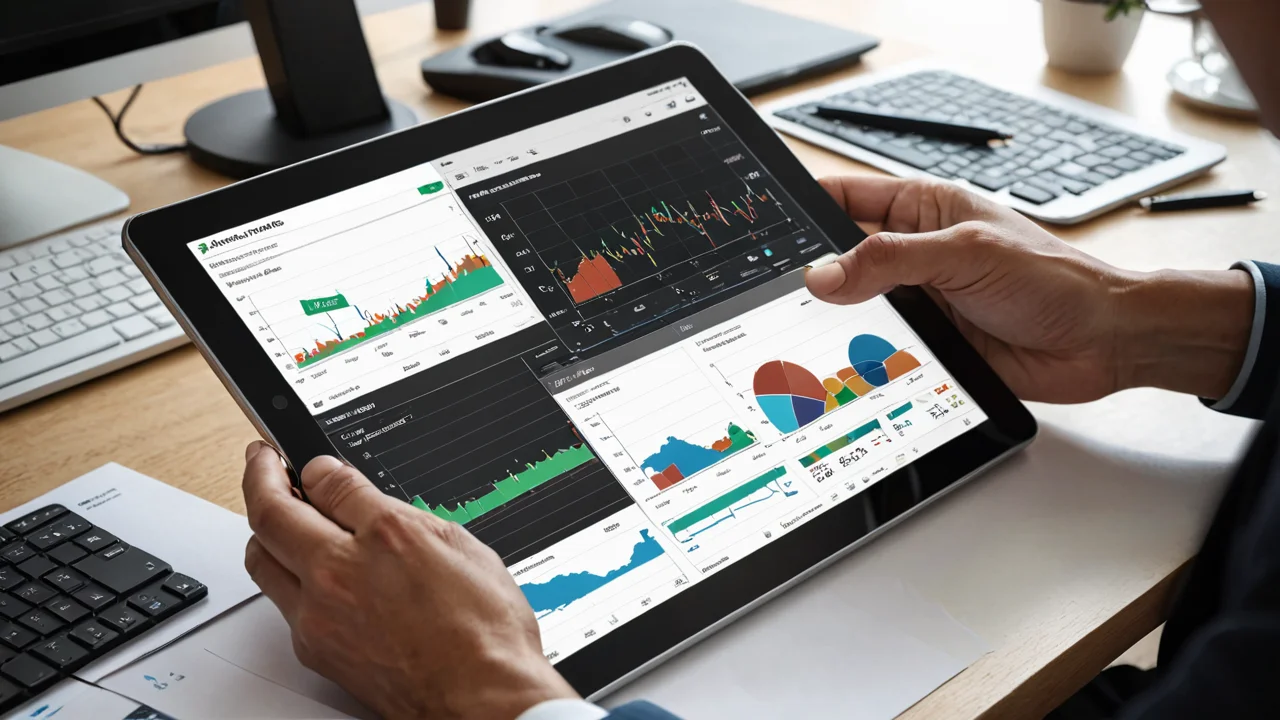
FXTM's platform stack for Kenyan clients is MT4, MT5 and the FXTM app, delivered through Exinity Capital East Africa Ltd under CMA licence No. 135 as a Non-Dealing Online FX Broker. That licensing category matters more than the marketing copy: a non-dealing broker routes client orders rather than taking the other side of them, so the platform's job is execution and reporting, not inventory management. What follows is a mechanics-first walkthrough of what the software does, where it holds up, and where the constraints sit.
What the Terminal Gives You
MT4 remains the workhorse. It ships with nine timeframes, around thirty built-in indicators, and the MQL4 language for custom scripts and expert advisors. The order panel handles market, limit, stop and stop-limit entries, with trailing stops and partial closes available directly from the terminal.
MT5 is the newer engine and the more interesting one for anyone building automation. It adds depth-of-market data on supported instruments, a built-in economic calendar, more timeframes, and MQL5, which is meaningfully faster for backtesting than MQL4. If your workflow involves optimising strategies across parameter sets, the difference is not cosmetic.
| Platform | Order types | Automation | Best for |
|---|---|---|---|
| MT4 desktop | Market, limit, stop, stop-limit | MQL4 EAs | Manual FX, legacy EAs |
| MT5 desktop | Above plus depth of market | MQL5 EAs | Backtesting, multi-asset |
| MT5 web | Core order set | Not supported | Fast access, no install |
| FXTM app | Market, limit, stop | None | Position monitoring |
The FXTM app is a monitoring and light-trading tool rather than a replacement terminal. Charting is thin, indicator depth is limited, and there is no path to running an EA. In practice we treat it as a companion to MT5, useful for managing open exposure from a phone, not for building entries.
Order Routing and Execution
FXTM operates as a non-dealing broker under its CMA licence, which places it in the agency/STP category rather than the market-maker category. In plain terms, the broker passes orders through to liquidity providers instead of quoting against the client. That structure reduces the conflict of interest that exists when a broker profits from client losses, though it does not eliminate slippage.
Latency on a Nairobi connection to FXTM's servers sits in the range you would expect for a broker without a local matching engine. The practical implication lands on news events: during the London-New York overlap, roughly 16:00-19:00 EAT, fills are fastest and spreads tightest. Outside that window, particularly in the Asian session, expect wider quotes and slower fills on exotic pairs.
Order types behave as documented. Stop-limit orders on MT4 do not exist natively, which catches out traders migrating from MT5. Guaranteed stops are not part of the standard offering here, so a stop is a stop, not a promise.
Accounts, Spreads and Costs
The account range covers Standard, Cent and ECN variants, and an Islamic swap-free option is available for traders who need it. Cent accounts let you run live execution at one-hundredth of standard position size, which is a genuine tool for testing a system with real fills rather than demo ones.
| Account | Spread model | Commission | Notes |
|---|---|---|---|
| Standard | From ~1.6 pip EURUSD | None | USD base, M-Pesa funding |
| Cent | Similar to Standard | None | 1/100 position sizing |
| ECN | From 0.0 pip | Per-side commission | Raw spread + fee |
| Islamic | Varies by type | None | Swap-free |
The cost comparison between ECN and Standard is arithmetic, not philosophy. A trader running high-frequency intraday setups on tight spreads will usually do better on ECN once commission is counted. A swing trader holding positions over days will often find the Standard spread competitive, because commission on both entry and exit eats the advantage.
Base currency is USD, with EUR and GBP also supported. A KES account is not confirmed in the research we hold, so Kenyan clients funding through local rails should expect a conversion cost when the account is USD-denominated. That cost is a real line item, not a rounding error, and it belongs in your spreadsheet alongside spreads.
Desktop, Web and Mobile
The desktop terminals are the full experience, and they always will be. MT5 desktop supports multi-monitor layouts, custom chart templates and one-click trading from the depth-of-market ladder, none of which translate properly to a browser.
The web terminal covers the core order flow. No installation, works from a borrowed machine, supports the standard order types. What it does not do is run expert advisors, hold custom indicators, or persist complex template layouts. Traders who rely on automated entries will find it a dead end.
Mobile splits into two products. The MT5 mobile app is a legitimate cut-down terminal with charting and order management. The FXTM app is narrower still. Neither is a substitute for the desktop build if your strategy depends on precise entry timing.
Funding Around the Platform
Deposits and withdrawals run through M-Pesa, Airtel Money and Equitel on the mobile side, plus cards and bank transfer. Mobile channels are typically instant and fee-free, with a minimum deposit from USD 10 on Standard via M-Pesa. Account funding and platform choice are separate decisions, but they intersect at settlement: if your edge depends on entering within seconds, an instant deposit is less relevant than a fast withdrawal when you need capital back.
Execution quality is the variable you can actually measure. Before committing size, log your fills against the quoted price for two weeks on a cent account, on the pairs you actually trade, at the hours you actually trade them. That dataset tells you more about this broker than any review, including ours.

Risks Before You Commit
The honest constraints are operational rather than existential. CMA rules cap retail leverage at 1:400 for major FX pairs, which is meaningfully lower than the 1:1000-plus advertised by offshore entities outside the register. Lower leverage is not a drawback for most retail accounts, but it does change margin maths for anyone running a strategy calibrated to higher gearing.
Spread widening and slippage around news remain the main execution risks, and they hit stop orders hardest. A stop placed inside the typical spread spike can fill far from its level.
Payment limits are a practical constraint. M-Pesa caps transactions at KES 250,000 with a daily ceiling of KES 500,000, so larger funding or withdrawals require splitting across channels or using bank transfer. Plan for that if your account size is above the mobile limit.
On the tax side, Kenyan tax residents treat forex and CFD profit as ordinary income, added to taxable income and taxed on graduated bands running roughly 10% up to a 35% top marginal rate. Annual returns covering worldwide income are filed between 1 January and 30 June.
Testing the Platform Yourself
Demo accounts with full MT5 functionality are the cheapest way to answer the questions this page cannot. Build a template, run your indicators, place a few orders during the overlap window, and watch how the ladder behaves when volatility spikes.
For live validation, a cent account is the better instrument. It uses real execution, real liquidity and real slippage, at position sizes small enough that a month of testing costs less than a dinner. Most traders skip this step and then wonder why their backtest and their live equity curve diverge.
A reasonable sequence looks like this:
- Run the demo for two weeks on your actual instruments and hours
- Move to a cent account and log fills against quotes for a month
- Compare measured slippage against your strategy's tolerance
- Only then scale position size
Where the Risk Line Sits
The platform itself is the least of the variables here. MT4 and MT5 are mature, well-documented, and behave predictably on a decent connection. What changes outcomes is how you use them: whether you have measured slippage on your pairs, whether your position size survives a 1:400 margin regime, and whether your cost model accounts for currency conversion on a USD-denominated account funded in KES.
Fits if you run MT4 or MT5 with standard indicators or MQL-based automation, want local funding through M-Pesa without friction, and are comfortable with CMA-capped leverage at 1:400. It also suits traders who value a locally licensed entity and a Nairobi office over an offshore wrapper with higher gearing and no local recourse.
Doesn't fit if your strategy depends on leverage above 1:400, if you need guaranteed stops or exotic order types, or if you trade at volumes where a KES 500,000 daily mobile limit becomes an operational headache. Traders whose edge relies on sub-second execution on news should compare measured latency and fill quality across brokers rather than assume any platform delivers it.
The risk line is not regulatory, it is arithmetic. Size positions so that a normal losing streak does not force you to withdraw, keep enough of your capital off the platform that a single venue's downtime does not stop you trading, and treat the platform as a tool rather than a strategy.


Asked and answered
Does FXTM offer MT5 to Kenyan clients?
Yes. MT5 is available across desktop, web and mobile, alongside MT4 and the FXTM app. MT5 is the stronger option for automation and backtesting, while MT4 remains the standard for legacy expert advisors written in MQL4.
Can I run expert advisors on the web terminal?
No. The MT5 web terminal supports manual order flow but does not run expert advisors or custom indicators. For automated strategies you need the desktop terminal with MQL5 support.
What leverage can I use on MT4 or MT5 with FXTM in Kenya?
Retail leverage is capped at 1:400 for major FX pairs under CMA rules, regardless of which platform you run. The platform does not change the cap. Offshore brokers advertising 1:1000 or higher operate outside the CMA register.